
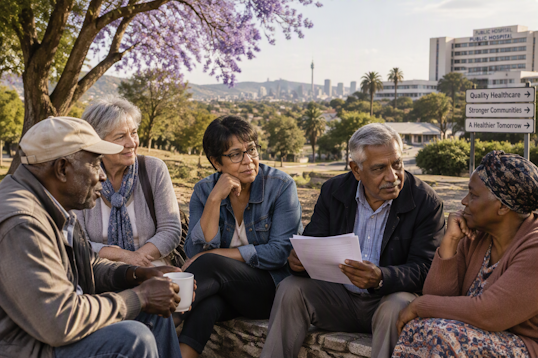
Why more South African seniors are struggling to access the healthcare they need most
Honouring a Lifetime
Getting older is a natural journey of being treated with respect and shouldn't be a luxury.
South Africa is ageing, much like many other countries around the world. According to Statistics South Africa, the number of people aged 60 and older has grown from 3.6 million in 2002 to 6.6 million in 2025, representing 10.5% of the population. This percentage is expected to continue rising as South Africans live longer and healthier lives.
Yet there is a troubling paradox. While we celebrate longer life expectancy and regard it as a blessing in many cultures and faith traditions, many older South Africans find that healthcare becomes less affordable precisely when they need it most.
For retirees living on reduced and often fixed incomes, annual increases in medical scheme contributions, out-of-pocket medical expenses, and gap cover premiums frequently exceed pension increases. What was affordable during their working years can gradually become unsustainable in retirement. Many are forced to reduce benefits, cancel gap cover, or leave private healthcare altogether, despite having contributed to these systems throughout their lives. As a result, many are left with no choice but to rely on an already strained public healthcare system.
The consequences are significant. Only around 21.9% of older South Africans have medical aid coverage, while approximately 68.5% rely on public healthcare facilities. At the same time, state grants remain the primary source of income for many households headed by older persons. These realities highlight the growing financial vulnerability faced by a large portion of our elderly population.
The issue extends beyond affordability. It raises a deeper question about how society values its older citizens.
Ageism is not always obvious. It is not only found in stereotypes, dismissive attitudes, or the absence of older faces in advertising campaigns and magazine covers. Sometimes it appears in systems and structures that unintentionally make essential services increasingly inaccessible to those advancing in age.
Many of today's pensioners spent decades building businesses, investing in homes, raising families, teaching children, serving in public institutions, paying taxes, and contributing faithfully to retirement funds and medical schemes. Yet many now find themselves struggling to afford the very healthcare systems they helped sustain.
Many seniors are asset-rich but cash-poor. They invested in property when their income and cash flow allowed it, but rising rates, maintenance costs, insurance premiums, and everyday living expenses have become increasingly difficult to manage. What once represented financial security can become a financial burden later in life.
Perhaps the greatest concern is the growing "missing middle" of elderly South Africans. They earn too much, or possess assets of sufficient value, to qualify for meaningful assistance, yet too little to comfortably afford comprehensive private healthcare. They often find themselves caught between an overburdened public sector and a private healthcare system that becomes increasingly costly with age.
Many healthcare-related products are no longer purely community-rated but increasingly reflect age-related risk considerations. While this may make commercial sense, it raises difficult questions about accessibility and affordability for people who are most likely to need healthcare support.
This is not merely an elderly issue. When parents and grandparents can no longer afford healthcare, families often step in to provide financial, emotional, and practical support. The impact therefore extends beyond individuals to children, grandchildren, and entire communities.
Older South Africans are not seeking charity. They seek dignity. They want the opportunity to remain independent, receive quality healthcare, and enjoy the peace of mind that comes from knowing they will be cared for when they are at their most vulnerable.
Healthcare is not merely a financial issue. It is a human issue. The way we care for older persons reflects our values as a society. Every one of us hopes to grow older. The question is whether we are building a future in which age is respected, supported, and valued, or merely tolerated.
Food for Thought
A society is often judged by how it treats its most vulnerable members. If healthcare becomes unaffordable for those who need it most, is the challenge simply financial, or is it also a matter of dignity, fairness, and respect for those who have travelled furthest along life's journey?
After all, ageing is not somebody else's future.
It is a destination we are all travelling towards.